
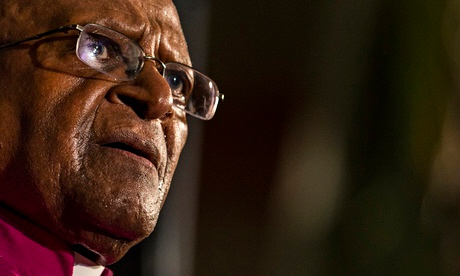
 In The Guardian yesterday, Desmond Tutu wrote about how he watched helplessly, as a young child, while his father repeatedly abused his mother and his challenges in forgiving him.
He can vividly recall the smell of alcohol and see the fear in his mothers eyes. He also says that:
“The traumas we have witnessed or experienced live on in our memories. Even years later they can cause us fresh pain each time we recall them.”
These are signs of significant trauma that are still affecting him. EFT (Emotional Freedom Techniques) or Tapping is a powerful tool to gently release the emotions from the trauma so that the memory can be recalled without associated pain. Often people report that they can remember in detail the events but it was as if it happened to someone else as there is no emotional pain involved. One way to start with using EFT on a specific traumatic memory would be to give that memory a title (as if it was a scene from a movie) and then rate the level of negative intensity of that experience on a scale of 0 to 10 with 0 being no negative intensity at all and 10 the most possible.
An initial setup statement might be:
“Even though I have this ‘first time I saw my father beat my mother’ memory, I accept myself”
For more step by step details of the process, download a free manual or attend a course.
Beliefs
Once a lot of the emotional charge is released, it is possible to identify beliefs that were created as a result of the experience. In Desmond Tutu’s example, a child may create beliefs about themselves and about life such as “Life isn’t safe”, “I’m not safe”, “I’m helpless or powerless” etc. These beliefs can then colour the way we think, feel and act in the years following.
Taking the belief “I am powerless”, as an example, can lead to an avoidance of situations of confrontation because of the belief that one can’t make a difference so what is the point. On the other hand, someone else going through the same childhood may create the opposite decision – “I could’t help my mother so I am going to make sure this doesn’t happen again to others”. This could lead to actions of activism or support for vulnerable families.
When positive action results from negative experiences, people often resist releasing negative emotions from the trauma as they are proud of the strength that the experience has given them and what they have achieved in their lives. They often say “It has made me who I am”. What they often don’t realise is the releasing the negative does not take away the positive strength they created and actually gives it more power by releasing the need and attachment to the positive. A good EFT statement would be:
“Even though I don’t want to let go of this (negative childhood experience) as it has made me who I am, what if I could keep my strength while letting go of the negative feelings associated with the experience (eg fear, anger, resentment etc)”
According to biologist, Bruce Lipton, in his book, The Biology of Belief, the beliefs we create are not only shaped by our childhood but also by our experiences in utero and during birth.
New Aspects and Insights
As an EFT session progresses and one drops through the layers of emotion, new emotions and insights arise. Desmond Tutu mentions that on reflection as an adult he has been able to uncover other aspects and emotions – “I realise now that is was not just with him that I was angry. I was angry with myself. Cowering in fear as a boy, I had not been able to stand up to my father or protect my mother. So many years later, I realise that I not only have to forgive my father, I have to forgive myself”.
In EFT, as the negative intensity of the trauma reduces, cognitive shifts arise. Desmond Tutu shows this too as he finds compassion to his father when he writes “Intellectually, I know my father caused pain because he himself was in pain. Spiritually, I know my faith tells me my father deserves to be forgiven… but still it is difficult.”. One wonders what kind of childhood his father had and whether he also experienced similar trauma as a child.
So how is it possible to truly forgive with an open heart?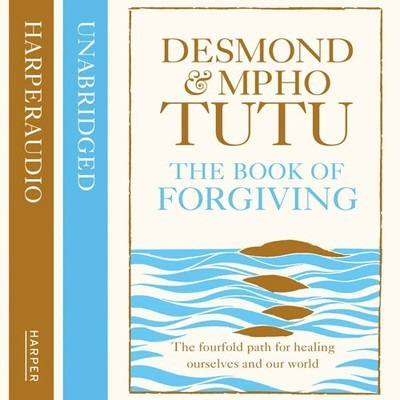
Some people find it hard to forgive because they feel it will let the perpetrator off the hook. What they don’t always realise is that holding on to negative feelings such as anger, fear and resentment, may prevent themselves from experiencing peace and freedom from that memory. Desmond Tutu says that “We don’t forgive others to help the other person. We forgive for ourselves. Forgiveness, in other words, is the best form of self -interest”.
This may press some peoples’ buttons and I totally understand. Forgiving is no easy process and it does not mean that we approve, in any way shape or form, of their actions. Heartfelt forgiveness can only be truly possible when there are no negative emotions left about the memory. Here are some EFT statement that can help move towards forgiveness, if this is the direction you would like to go:
“Even though I can’t ever forgive them, I deeply and completely love, accept and forgive myself”
“Even though what they did was wrong, I choose to be free from this memory”
“Even though I will never accept their actions, I am open to the possibility that one day I can release myself from that memory and forgive them”
If you are a mum who wants to have feel happier in herself, with her children check out my book Frazzled to Fabulous in 5 Minutes a Day Follow my quick and easy step-by-step programme here https://www.frazzledtofabulous.com/
To read more on forgiveness, buy Desmond Tutu’s latest book, The Book of Forgiveness.