
How do you avoid getting sucked into your clients’ stories?
How do you support your clients but don’t take on their problems?
I love helping people but get caught up in trying to fix them.
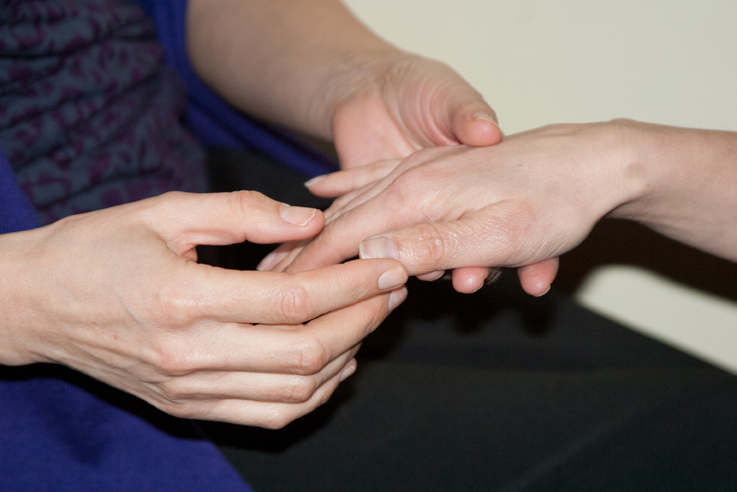 These are some of the kinds of questions that arise from trainee practitioners. The way I like to see myself as practitioner is as an empty vessel from which universal wisdom flows. I don’t need to know/ input or advise but simply hold a safe space for the client’s healing to unfold. It is not my place to sort the client out/ fix her or make her better. I don’t know the direction of her healing path or what is best for her. I may have intuitions about what needs to happen next but it is her journey, not mine. I am not attached to the outcome of the session and I don’t know ahead of time where this session is going to end. I am willing to travel along side my client into the journey of the unknown.
As a new practitioner, I remember being very interested in the clients’ stories and found myself getting sucked into them with the result of feeling upset/ helpless or disturbed particularly if they were similar to my own challenges. After a while I noticed that I felt apprehension and sometimes fear about hearing the clients’ stories especially if it was connected to things I was scared of. Nowadays I am not interested in my client’s story but simply the effect it has on her. I am interested in how she feels about it, where she feels it in her body. I observe her with a gentle eagle eye noticing shifts and changes in her body language, voice, facial expressions etc. So even though I hear her story, my focus is on her rather than her story.
As a new practitioner what can you do to get yourself out of the way of being truly present with your clients?
A starting point might be to explore what you feel your role of a practitioner is.
What is your attachment to making them better?
How would you feel if your client leaves feeling the same or dare I say worse?
How do you feel about working with issues that might trigger for you? For everyone this is going to be different depending on your personal story eg abuse, early unexpected death, PTSD, working with a perpetrator etc
The key to becoming a good practitioner is to work on yourself.
In my opinion, you can only take your client as far as you have been yourself. So the more inner work you do on yourself to release your own life traumas and limiting beliefs, the better a practitioner you will become.
The Personal Peace Process
In summary this involves making a list of every upsetting event that you have experienced throughout your life and giving each one a title. Give a rating on a scale between 0 and 10 of the severity of the event. Do EFT on each one. Set aside a period of time each day, maybe 30 minutes, to tap through each event until they are all zero. This process can shift your beliefs and experience, not only related to being a practitioner, but life in general. For thorough details of how to do this, see Gary Craig’s page.
If you are a mum who wants to have feel happier in herself, with her children check out my book Frazzled to Fabulous in 5 Minutes a Day Follow my quick and easy step-by-step programme here https://www.frazzledtofabulous.com/